Translating description...
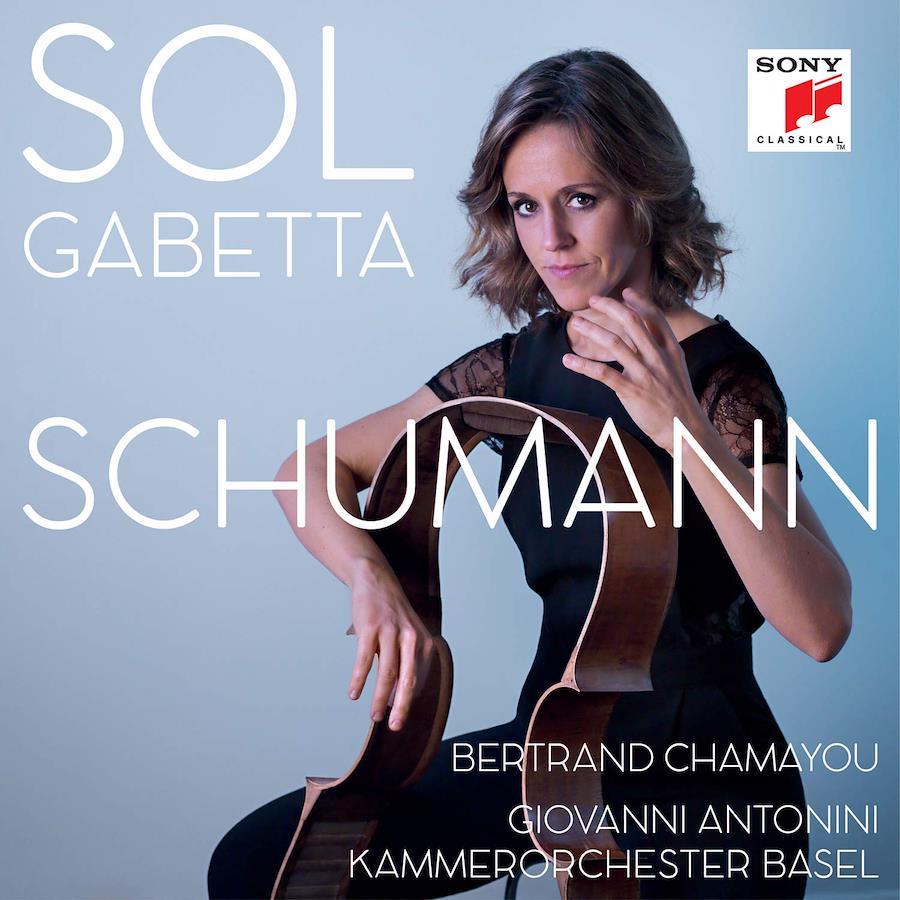
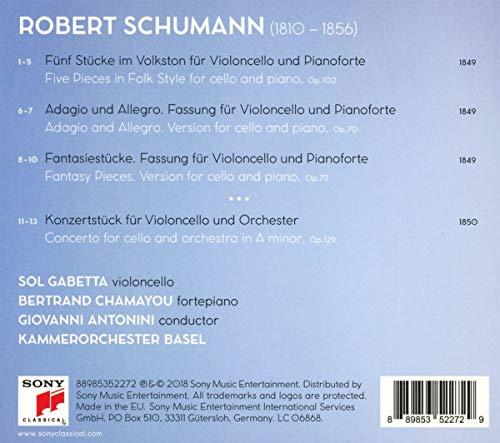
通常1-5営業日で発送【新品未開封品】The year 1850 was a productive one for Schumann. He had just taken up his new post as director of music in D?sseldorf and it was here, in a veritable frenzy of creativity, that he wrote his Cello Concerto op. 129 in A minor in barely two weeks. Not only was it his first great work for violoncello and orchestra, it remains one of the most frequently performed of all violoncello concertos. As Sol Gabetta notes, it is clear from the work that the great Romantic composer was immensely happy at this time: "You can sense Schumann's emotional state in the music. It is all cast from the same mould." Originally described as a "Concertst?ck" (concert piece), the work is made up of three movements that are seamlessly joined together, creating a continuous stream of music in which the violoncello is the ideal vehicle for Schumann's musical ideas. The opening movement is notable for it's inward-looking melancholy, the slow second movement for it's dreamy wistfulness, while the third is a lively, almost folklike envoi. As the violoncellist emphasizes, Schumann was ahead of his time when he wrote this work. Unlike earlier concertos in which the orchestra tended to accompany the solo instrument, the orchestra is now the soloist's equal. Sol Gabetta, who was born in Argentina but who now divides her time between Switzerland and Paris, has performed this concerto many times in the course of her international career, of course. But she has now decided to record it for Sony Classical together with a number of other works by Schumann. She is joined by a group of fellow musicians who are among her closest friends. The Cello Concerto was recorded with the famous Basel Chamber Orchestra under the direction of Giovanni Antonini, one of the pioneers of early music. Concerts and recordings with the Basel Chamber Orchestra are like a family reunion for Sol Gabetta: "I more or less grew up with this orchestra. It gave me my first big break before I became known as a soloist. I now know every one of the players and we've worked together on numerous projects, growing together until we are now one big family." In 2015 Sol Gabetta made an acclaimed recording of Beethoven's Triple Concerto with the orchestra and Antonini as well as with the violinist Giuliano Carmignola and the pianist Dejan Lazic. Sol Gabetta's Schumann album also features three chamber works that she recorded in Paris with the French pianist Bertrand Chamayou, with whom she has worked for many years. The works in question are the Fantasy Pieces op. 73, the Adagio and Allegro op. 70 and the Five Pieces in Folk Style op. 102. In 1849, a year before composing his Cello Concerto, Schumann had developed an intense interest in chamber music, an interest that resulted in several different works for a melody instrument and piano. Among them are the Five Pieces in Folk Style op. 102 for violoncello and piano, the Fantasy Pieces op. 73 that were originally scored for clarinet and piano and the Adagio and Allegro op. 70 that were originally intended for horn and piano. But according to Schumann, these intimate character-pieces can also be played on a melody instrument such as the violoncello.
-
【免責事項】特典は終了する場合がございますのでお問合せ願います。お問合せが無い場合は、新パッケージでお届け致します事ご了承願います。
| 產品 # |
B0789G9LVS |
| 重量 |
115 g |
| 商品包裝尺寸 |
14 x 13 x 1 cm |
誰營運ZenPlus?
ZenPlus由位於大阪的日本公司ZenGroup營運。
售賣的商品是否100%正貨?
根據商舖的規約,商舖有責任確保所有上架貨品均為正貨。故此,敝平台會以所有已上架貨品均為正貨的前提下營運。
萬一收到懷疑非正貨的商品,請傳送有關商品的照片及影像,並附上詳細說明予我們的客戶支援團隊。
ZenPlus可以寄往甚麼國家?
我們可以把商品運送到世界任何國家。不過,送貨地區亦可能基於最新的禁運品條款及/或當前的各種國際局勢而受影響。敬請諒解。
會產生關稅嗎?
關稅取決於包裹的物品種類及申報價值。故此有關包裹會否產生關稅與產生的稅率,將根據包裹輸入的國家或地區而定。
我們的服務不包含關稅和進口稅;所以如果所在地區的海關對您的包裹收取費用,您需要自行支付這些費用。
故此,請務必事前確認包裹物品於送貨地區的入口規例。如包裹將送往香港,可參閱
香港海關的應課稅品總覽頁。
如何計算運費?
運費根據包裹的大小、重量及目的地來計算。在加入商品到購物車並確認訂單時,運費會根據送貨方式即時顯示。故請前往結帳頁面直接確認。
下訂單起計,送貨需要多久?
送貨時間將受商品的庫存情況及國際局勢而受影響,但一般會於4天至兩星期左右從日本送出商品。
※商品需調貨或製造商缺貨等情況下,可能需更長時間。