
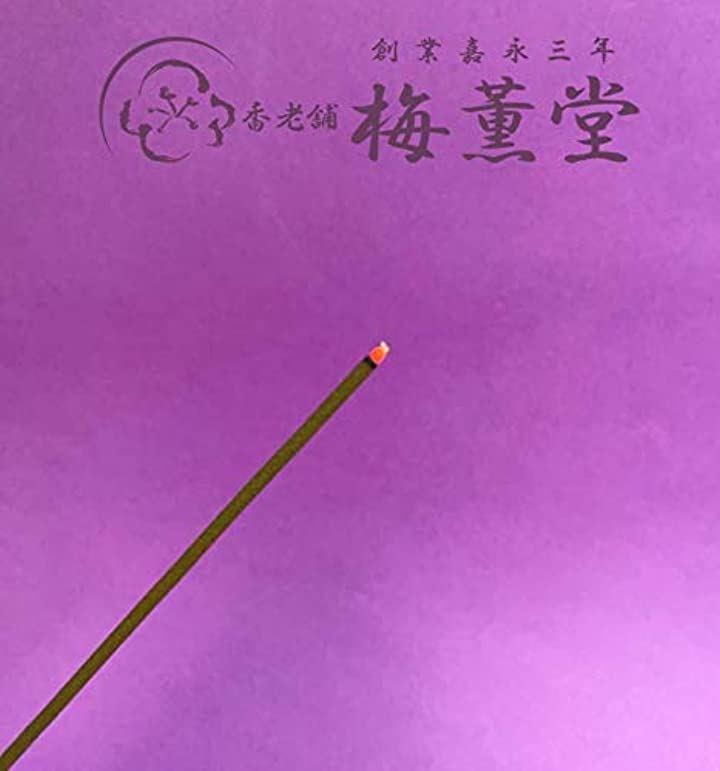
Kaorundō Co., Ltd. was founded in 1850 and sells incense and joss sticks based in Awaji Island, Hyogo Prefecture.
Joss sticks are closely related to Japanese culture, climate, and national character.
We offer market proposals with the desire to value customer feedback and culture, and to be of service.
Furthermore, in order to contribute to the development of fragrance culture, we are challenging technological innovation and developing products that focus on naturalness, health, and convenience while utilizing traditional techniques.
The charming townscape of Ei, selected as one of the 100 Best Fragrant Landscapes by the Ministry of the Environment.
The "100 Best Fragrant Landscapes" is a designation of 100 locations that are particularly excellent as fragrant environments, as part of supporting regional initiatives to preserve and create good fragrances and the natural and cultural environments that are their source.
Over 170 years since incense making began on Awaji Island
"Incense Making in Awaji City" and "100 Best Fragrant Landscapes"
After the end of World War II, when American occupying forces soldiers visited Awaji City Ei (formerly Ei, Ichinomiya Town), they reportedly asked passersby:
"Is something happening in town today?"
To this, a passerby replied, "Why do you ask if something is happening?"
The soldier then said, "Well, the scent of incense is coming from all over town, so I wondered if there was a funeral for someone important.
" There is an anecdote that he replied.
In Awaji City Ei, many incense factories line the streets, and the scent of incense drifts as a part of daily life. Visitors to the town are always surprised by the scent of incense emanating from the entire town.
Approximately 70% of the total national production of joss sticks, and incense making, which has continued for over 170 years since the Kaei era, is still deeply rooted in the lives of the residents of Awaji City Ei, with one in four residents involved in incense making.
This "Incense Making in Awaji City" was certified as one of the Ministry of the Environment's "100 Best Fragrant Landscapes" in 2001.
We, Kaorundō, as one of the oldest manufacturers that started incense making in Awaji City Ei, hope to continue to assist in preserving the rich fragrance and the nature, culture, and life that are its source for the future.
Gazing at the Tradition and Future of Fragrance
All About Obon
Obon is originally an abbreviation, and its formal name is "Urabon-e."
It is said to be derived from the Sanskrit word "Ullambana," meaning "hanging upside down."
This originates from the story of one of Buddha's disciples, Mokuren Sonjya, saving his deceased mother.
One day, Mokuren Sonjya learned that his deceased mother was being tormented while hanging upside down in a hell called the realm of hungry ghosts, and asked Buddha how he could save her. Buddha replied:
"Offer food to the monks who have completed their training on July 15th.
Through the merit of that, you will be able to save your mother.
"
Since then, it is said that people began to offer prayers on July 15th, following Mokuren Sonjya's example, out of respect for their ancestors.
Currently, Obon often refers to the period from the 13th to the 16th of July or August.
(However, in some regions, the "Old Obon" is observed around the 15th of July according to the lunar calendar.)
Generally, the period from August 13th to 16th is called Obon holidays, and this is referred to as "Moon-delayed Obon."
Also, it is customary to have "Bon Odori" during Obon, which is said to originate from Mokuren Sonjya dancing all night in joy that his mother was saved.
All About Ohigan
The days when the length of day and night are equal are called the equinox, and there are two such days a year, in spring and autumn.
The equinoxes correspond to the "Vernal Equinox" and "Autumnal Equinox," and the three days before and after each, totaling seven days, are called Higan.
During Higan, families visit graves to remember the deceased and their ancestors.
Also, at various temples, memorial services called "Higan-e" are held to offer prayers for ancestors.
In the first place, "Higan" is a Buddhist term that refers to the world of enlightenment without delusion, that is, the Pure Land.
Incidentally, the world we live in is expressed as "Higan" (this shore).
The belief that the Pure Land where Amida Buddha resides is in the west is said to be the origin of Higan, with the day of prayer being the day the sun sets exactly in the west.
A Word About Gifts
We are sometimes asked, "What is a 'shinmotsu'?"
"Shinmotsu" refers to items or gifts given to others.
During the Ochuugen and Oseibo seasons, you may often see the word "shinmotsu" at department stores, or perhaps you have been asked by a store clerk when making a purchase, "Is this for a gift?"
So, what is the difference between "zoutouhin" and "shinmotsu"?
Simply put, they are the same, but when considering the nuances of the words, there is a slight difference between "zoutouhin" and "shinmotsu."
The character "進" (shin) in "shinmotsu" means "to offer" or "to present," and while "zoutouhin" can be given to anyone without choosing the recipient, "shinmotsu" is considered a gift or tribute to a superior.
Superiors refer to those who are older or in a higher position than oneself, such as bosses or seniors, but this also includes ancestors, the deceased, and their bereaved families.
"Shinmotsu" is generally accompanied by a "noshi paper" (officially called "kakegami") printed with mizuhiki (decorative cords) and noshi (a folded paper symbol of good fortune).
The type of "noshi paper" changes depending on the occasion, such as celebrations, condolences, or return gifts.
The type of "noshi paper" varies depending on the occasion, such as celebrations, condolences, or return gifts.
Incense Manufacturing (Handicraft Artisans)
(1) Fragrance Blending and Kneading
Various raw materials are placed in a kneading machine, mixed with water or hot water, kneaded like clay, compressed with a roller press to create "neridama" (kneaded balls).
(2) Bon-kiri (Sheet Cutting)
The "neridama" is fed into a roller press and extruded into long, thin strands like somen noodles.
(3) Itazuke (Arranging on Boards)
They are arranged closely together on boards called bonita.
(4) Drying
After being placed in a drying room, they are air-dried.
Jinko (Agarwood)
It is the resin that has accumulated and solidified in the Aquilaria tree, which grows in India and Southeast Asia, and is considered a high-grade wood among fragrant woods.
It is also called Jinko wood because its accumulated and solidified specific gravity is large and it sinks in water.
The resin, formed in the wood over many years, becomes buried in soil or water, solidifies, and accumulates, becoming a fragrant wood that emits a unique aroma.
Byakudan (Sandalwood)
An evergreen tree of the Santalaceae family distributed from the Malay Archipelago to India.
The wood itself emits a sweet fragrance and is also called Sendan.
It is an indispensable fragrant wood for Oriental perfumery and is also used as a material for fine arts and crafts such as Buddhist statues.
Due to the effects of natural disasters and other factors, the quantity of sandalwood has decreased, and with the increase in demand, it is becoming a precious material, approaching the value of agarwood.
Chōji (Cloves)
Chōji (cloves) are the dried flower buds of the clove tree, a tree of the Myrtaceae family.
The name Chōji was given because its shape resembles a nail.
Its origin is said to be the Moluccas Islands of Indonesia.
Currently, Indonesia and East Africa are the main production areas.
For those who cook, "cloves" may be more familiar than "chōji."
It is often used as a spice for meat dishes, curries, soups, and sauces.
It is characterized by its strong sweet aroma and a pungent, stimulating taste.
Keihi (Cinnamon)
Keihi (cinnamon) is the dried bark of the Cinnamomum aromaticum (Chinese cinnamon) and other related plants, and its origin is said to be southern China, Vietnam, and Sri Lanka.
You may be more familiar with "cinnamon" than "keihi."
The aroma of keihi is a refreshing scent, like that of the Kampo medicine Kakkonto.
It pairs well with Western confectionery such as cakes, bread, and cookies, as well as black tea, and is widely enjoyed in items like cinnamon rolls, cinnamon toast, and cinnamon sticks.
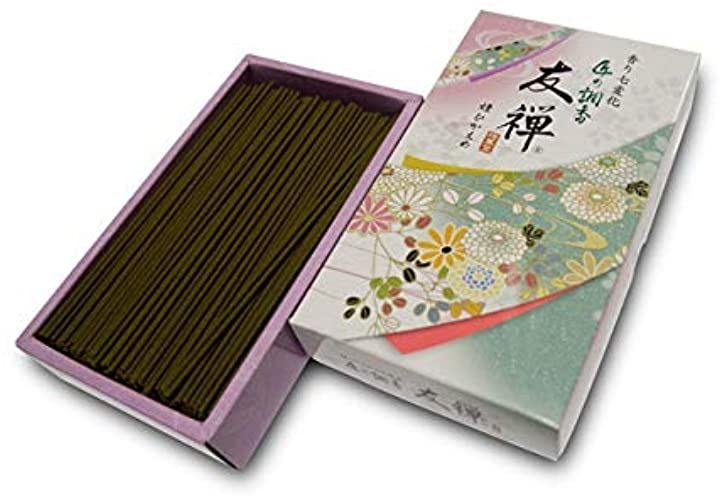
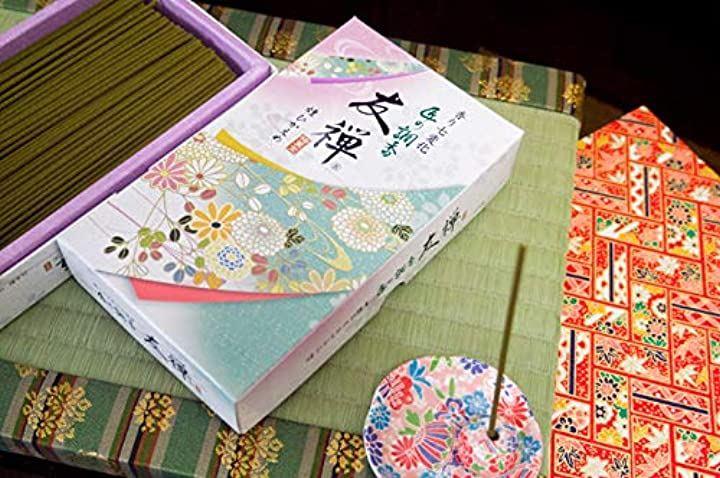
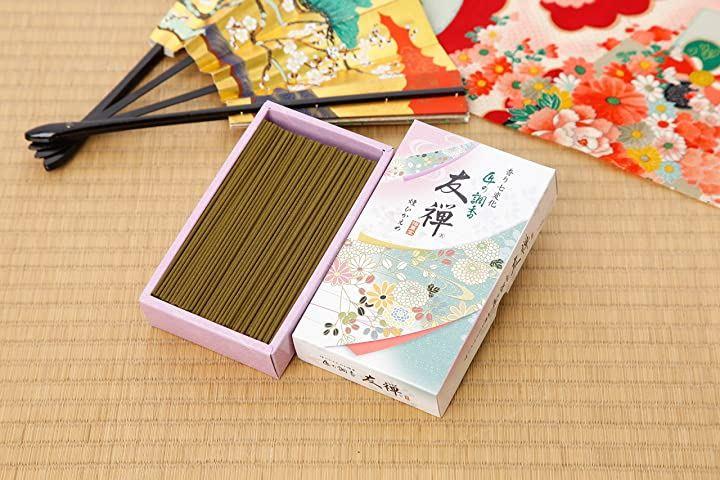
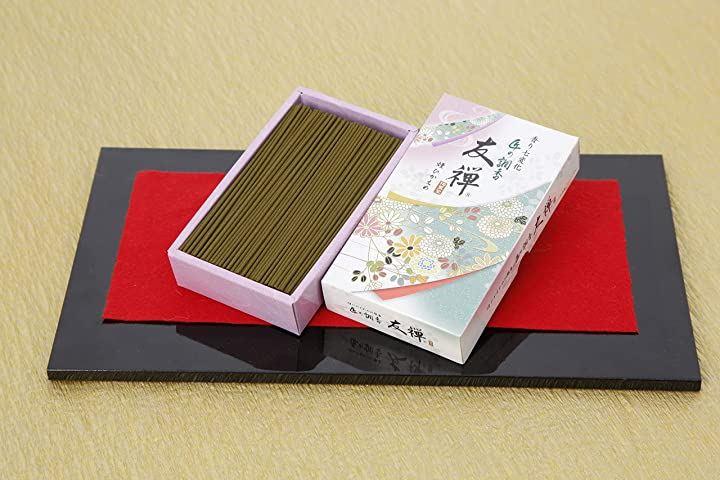
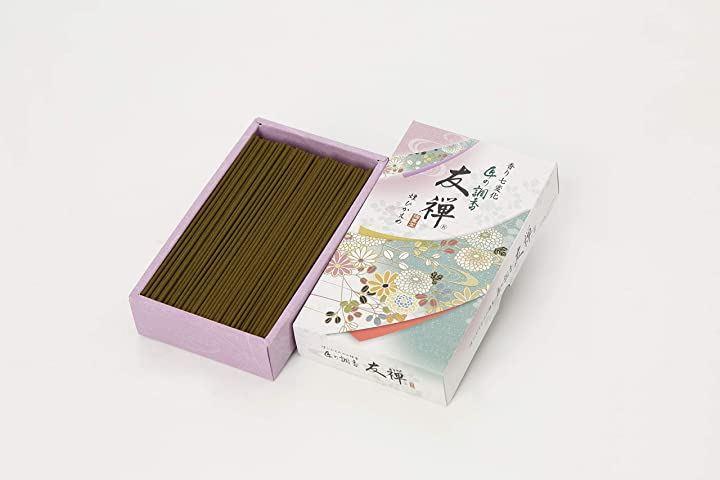
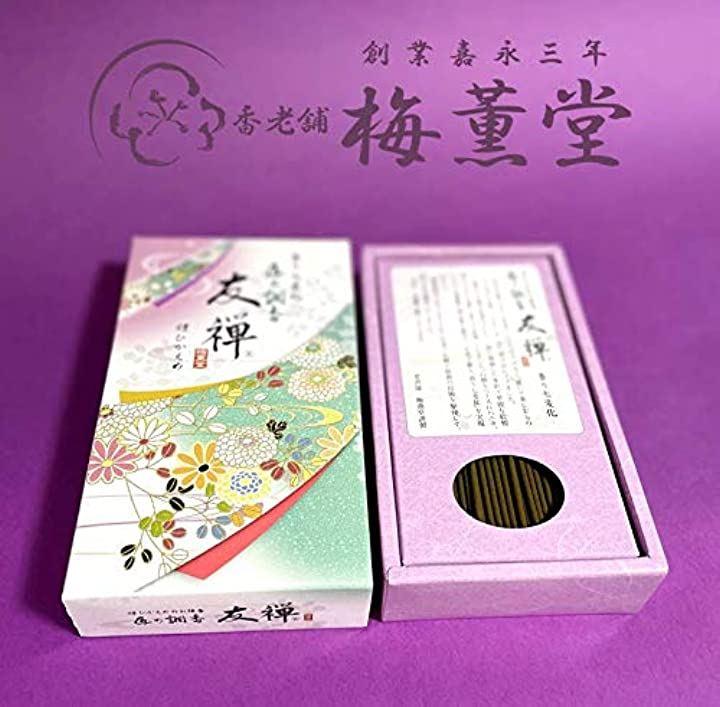
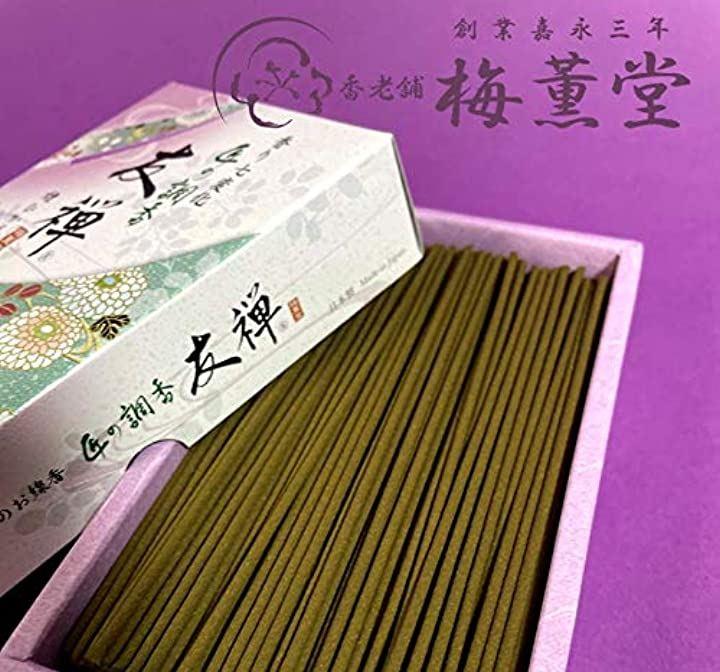
- Joss sticks with a sweet aroma that varies in a diverse way, based on natural sandalwood, vanilla, and cinnamon.
Fragrance blended by a master of fragrance who inherits the tradition since the founding in Kaei 3 (1850).
Pure domestic product from Awaji Island, Hyogo Prefecture.
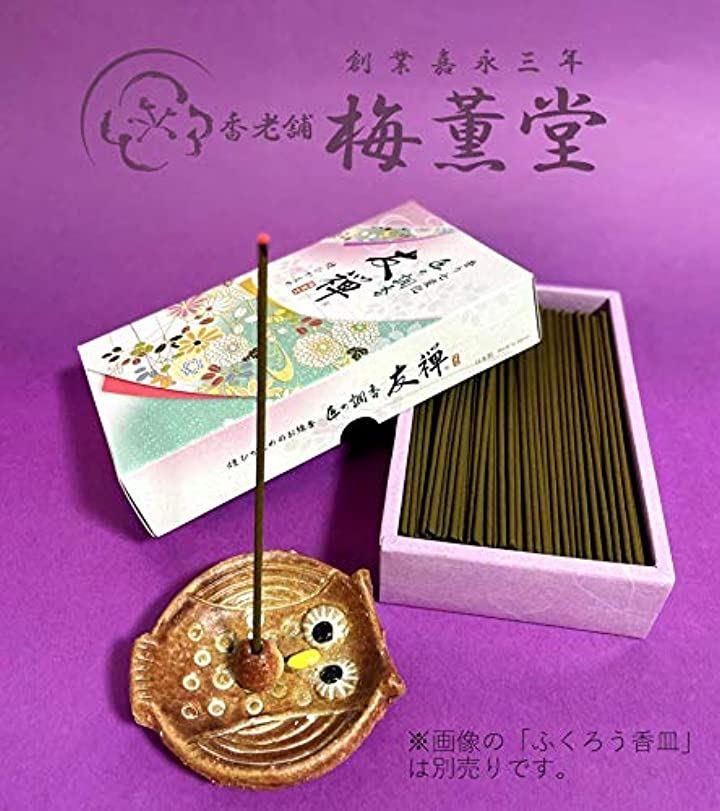
The burning time may vary slightly depending on how the incense is burned and the airflow.
- Main raw materials for joss sticks: Tabu powder, activated charcoal, vanilla, cinnamon, sandalwood powder, natural sandalwood essential oil, various Kampo medicines, dyes
- Contents: Approx. 108g Amount of smoke: Low smoke Incense stick length: Approx. 13.5cm Burning time: Approx. 25 minutes Product dimensions/weight: 93x35x160mm 162g
2023/03/06 14:36:00#527aa3991c263764c3416e3803edb7e99d127e999d04
| Product # | 2B4FCVW2RD |
|---|---|
| Weight | 160 g |
| Product package size | 9 x 4 x 16 cm |
You don't need to be in Japan to shop here. Sign up for a free account on ZenPlus now and enjoy buying and shipping to over a hundred countries, directly from Japanese online stores. You can ship your items internationally through JP Post (EMS, Airmail), UPS, DHL, FedEx, and other services. Get all the hottest items from Japan such as anime figures, Nendoroids, Nintendo and other video games, Hello Kitty and other kawaii plushies, fishing tackle, Japanese street fashion, Seiko and other watches from Japan, ramen and other Japanese foods, idol merchandise, and much, much more!
We work directly with Japanese shops registered with ZenPlus, so all internal processes are faster and more efficient - the result is a swift and affordable service, ready for you when you need it most. You have instant access to over 1,000 stores in Japan with just one click! Shop just as if you were in Japan, without spending a fortune. We'll get you the best deal possible from a vast collection of items from Japan. Join the ranks of people who prefer ZenPlus as their Japanese online marketplace.
We protect you, the buyer. Communication can be one of the biggest barriers when buying from Japan online, but it doesn't have to be that way. With ZenPlus, you are protected from many of the risks of international e-commerce: We'll take care of any questions, claims, and requests for the seller that you might have. We can provide a full refund if an item is not genuine, and a partial refund if it's not as promised. Feel free to ask us for more info about any of the items or shops on ZenPlus!