
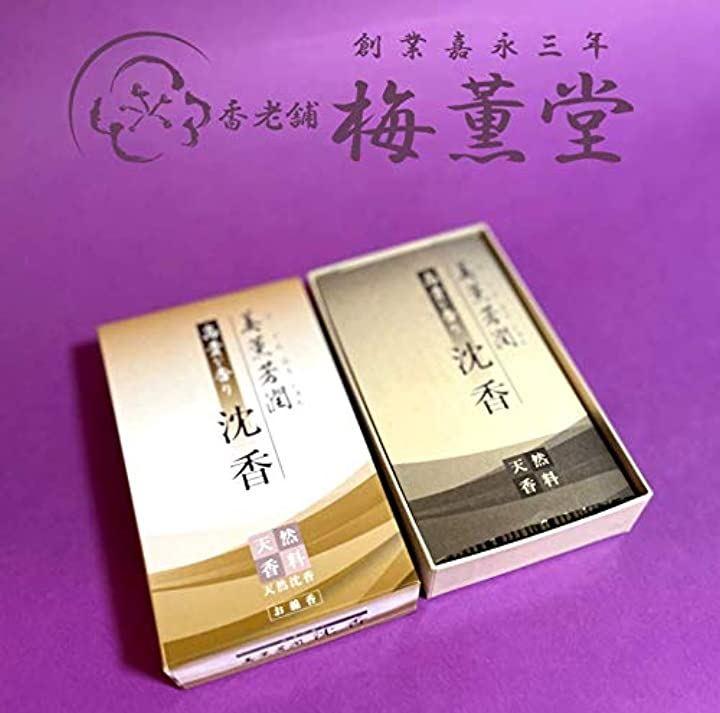
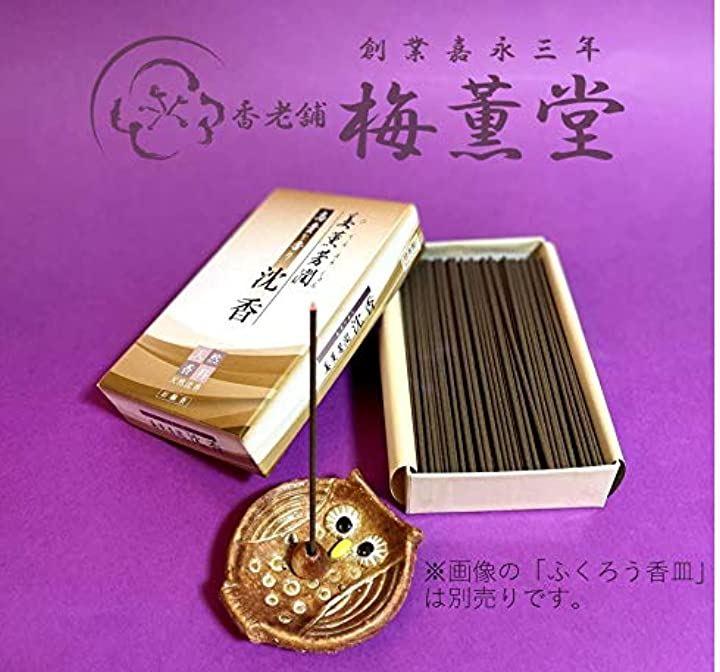
Kaunkudo Co., Ltd. was founded in 1850 (Kaei 3) and is based on Awaji Island, Hyogo Prefecture, selling incense and incense sticks.
Incense sticks are closely related to Japanese culture, climate, and national character.
We value customer feedback and culture, and we aim to be helpful by proposing products to the market.
Furthermore, we challenge technological innovation to contribute to the development of fragrance culture, utilizing traditional techniques while developing products that focus on natural ingredients, health, and convenience.
The townscape of E, selected for the Ministry of the Environment's "Fragrance Landscape 100 Selections."
The "Fragrance Landscape 100 Selections" is a list of 100 locations designated as excellent fragrance environments, supporting regional efforts to preserve and create pleasant scents derived from natural and cultural sources.
Incense making has been ongoing in Awaji Island for over 170 years.
"Incense making in Awaji City" and "Fragrance Landscape 100 Selections"
After World War II ended, when American occupation soldiers visited E, Awaji City (formerly Ichinomiya Town E), they reportedly asked passersby,
"Is there something happening in town today?"—
In response, passersby asked, "Why do you ask if something is happening?"
Then, the soldiers replied, "No, because I smell incense from the town, and I wondered if there was a memorial service for some distinguished person."
This is an anecdote.
In E, Awaji City, many incense factories line the streets, and the scent of incense drifts as a part of daily life, surprising visitors who can smell incense throughout the entire town.
Approximately 70% of all incense produced in Japan is made here, and since the Kaei era (about 170 years ago), incense making has been deeply rooted in the lives of one in four residents of E, Awaji City, and continues to be an integral part of their lives.
The tradition of incense making in Awaji City was recognized in 2001 by the Ministry of the Environment as part of the "Fragrance Landscape 100 Selections."
As one of the oldest manufacturers that started incense making in E, Awaji City, Kaunkudo hopes to continue helping preserve the rich fragrances, natural environments, cultures, and lifestyles for future generations.
A gaze that looks toward the tradition and future of fragrance.
Various aspects of Obon
Obon is originally an abbreviation; the full name is "Urabon-e" (Ullambana).
It is said to originate from the Sanskrit "Uranban" (meaning "to hang upside down").
This story is derived from the tale of Maudgalyayana (Mokuren), one of Buddha's disciples, who sought to save his deceased mother.
Once, Maudgalyayana learned that his mother was being tormented in the Gaki (hungry ghost) realm, hanging upside down, and he asked Buddha how to save her. Buddha replied,
"Offer food to monks who complete their training on July 15th.
With that merit, you can save your mother."
Since then, it is said that people have been offering memorial services on July 15th, following Maudgalyayana's example, to honor their ancestors.
Today, Obon generally refers to the period from July 13th to 16th in many regions.
(However, in some areas, the "Old Obon" is observed around July 15th based on the lunar calendar.)
Generally, the Obon holiday period is from August 13th to 16th, called "Tsukiyokure Obon" (delayed Obon).
During Obon, it is customary to perform "Bon Odori" (Bon dance), which is said to originate from Maudgalyayana dancing joyfully after saving his mother.
Various aspects of Higan
The day when day and night are of equal length is called the "Chūnichi" (midday), and occurs twice a year in spring and autumn.
The midpoints are "Shunbun no Hi" (Spring Equinox Day) and "Shūbun no Hi" (Autumn Equinox Day), and the seven days around each are called "Higan."
During Higan, families visit graves to remember their ancestors.
Temples also hold memorial services called "Higan-e" to honor ancestors.
Originally, "Higan" refers to the world of enlightenment, free from confusion, called the Pure Land in Buddhism.
In contrast, our current world is called "Shigan" (this shore).
The belief that the Pure Land of Amitabha Buddha is located in the west is the origin of the start of Higan, with the day of the sun setting in the west, around the equinox.
Stories about offerings
People sometimes ask, "What is 'Shinmotsu' (offerings)?"
"Shinmotsu" refers to items or gifts given to others.
During the Obon or year-end gift seasons, you may see the word "Shinmotsu" on department store displays or hear clerks ask, "Is this for a gift?" when purchasing.
So, what is the difference between "Gōtōhin" (gifts) and "Shinmotsu"?
In simple terms, they are similar, but considering their meanings, there are differences.
The character "Shin" in "Shinmotsu" means "to give" or "to present," and while "Gōtōhin" does not specify the recipient, "Shinmotsu" is typically a gift for someone of higher status, such as an offering.
A person of higher status refers to someone like a boss or senior, but this also includes ancestors, the deceased, or their bereaved family.
"Shinmotsu" is usually wrapped with a decorative paper called "Noshi" (officially "Kakegami"), often with a decorative element called "Mizuhiki" (a type of cord).
The type of Noshi varies depending on the occasion, such as celebrations, condolences, or return gifts.
Incense manufacturing (handcrafted artisans)
(1) Fragrance blending and powder kneading
Various raw materials are placed into a powder kneading machine, mixed with water or hot water to form a clay-like consistency, then compressed using a pressing machine to create "Neridama" (kneaded balls).
(2) Bonyuki (cutting into pieces)
The "Neridama" is pressed through a mold to form long, thin strands resembling somen noodles.
(3) Itamuki (placing on boards)
The strands are laid out closely on boards called "Banita" without gaps.
(4) Drying
The laid-out strands are dried naturally after being placed in a drying chamber.
Agarwood (Jinkō)
Resin from trees of the Thymelaeaceae family that grow in India and Southeast Asia, considered a high-quality fragrant wood.
Because it is denser than water and sinks, it is also called "Jinkōboku" (agarwood).
Resin that has accumulated and solidified over many years within the wood, buried in soil or water, producing a distinctive fragrance.
White sandalwood (Byakudan)
Evergreen trees of the Santalaceae family distributed from the Maluku Islands to India.
The wood itself emits a sweet fragrance, also called "Sendan."
An essential ingredient in Eastern-style fragrances, also used as a material for Buddhist statues and crafts, making it a precious fragrant wood.
Due to natural disasters and increased demand, the quantity of white sandalwood has decreased, and it is becoming a valuable material approaching the rarity of agarwood.
Clove (Chōji)
Clove is the dried flower bud of the tree Cinnamomum verum, a member of the Lauraceae family.
Its shape resembles a nail, which is how it got its name.
Its native origin is said to be the Maluku Islands in Indonesia.
Today, Indonesia and East Africa are major producers.
For cooks, it might be more familiar to call it "clove" rather than "Chōji."
It is often used as a spice in meat dishes, curries, soups, and sauces.
It has a strong sweet aroma and a spicy, tingling taste on the tongue.
Cinnamon (Keihi)
Cinnamon is made from the dried bark of trees such as Cinnamomum cassia (Chinese cinnamon) and other related species, believed to originate from southern China, Vietnam, and Sri Lanka.
It may be more familiar to call it "Cinnamon" rather than "Keihi."
The fresh, refreshing scent of Chinese herbal medicine like Kudzu root (Kakkonto) is characteristic of cinnamon.
It pairs well with cakes, bread, cookies, and tea, and is widely used in cinnamon rolls, cinnamon toast, and cinnamon sticks.
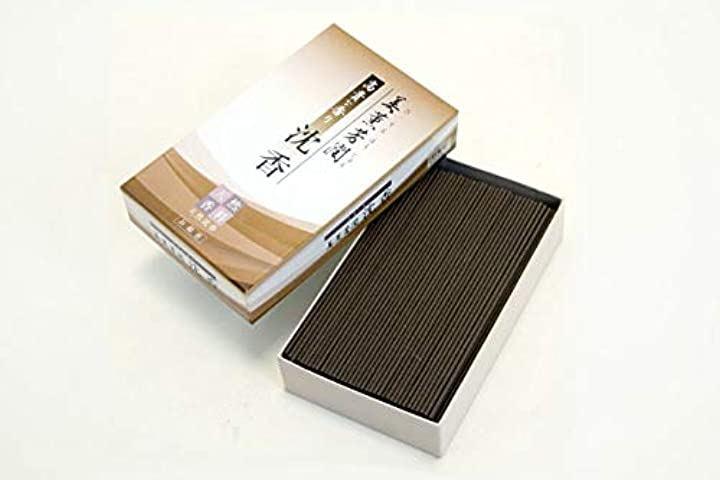
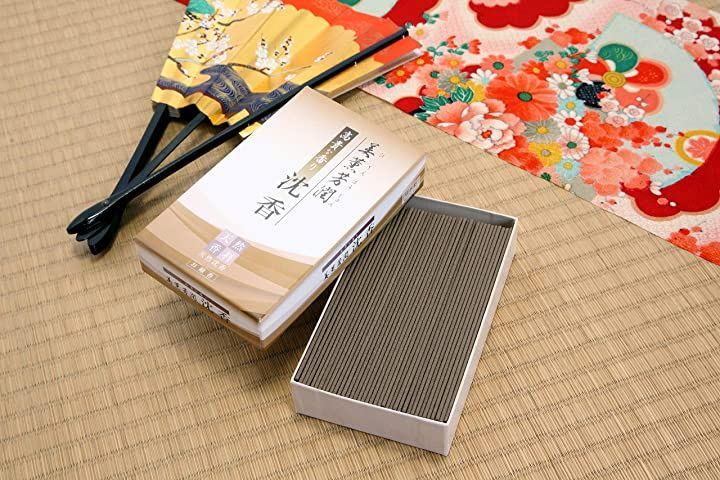
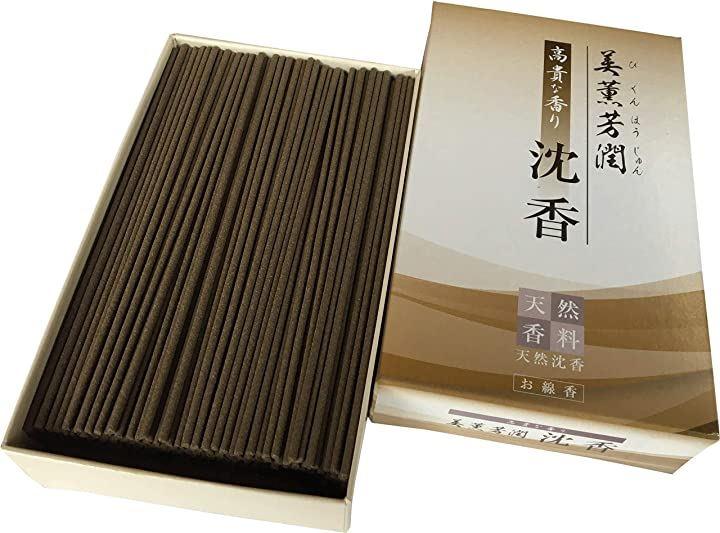
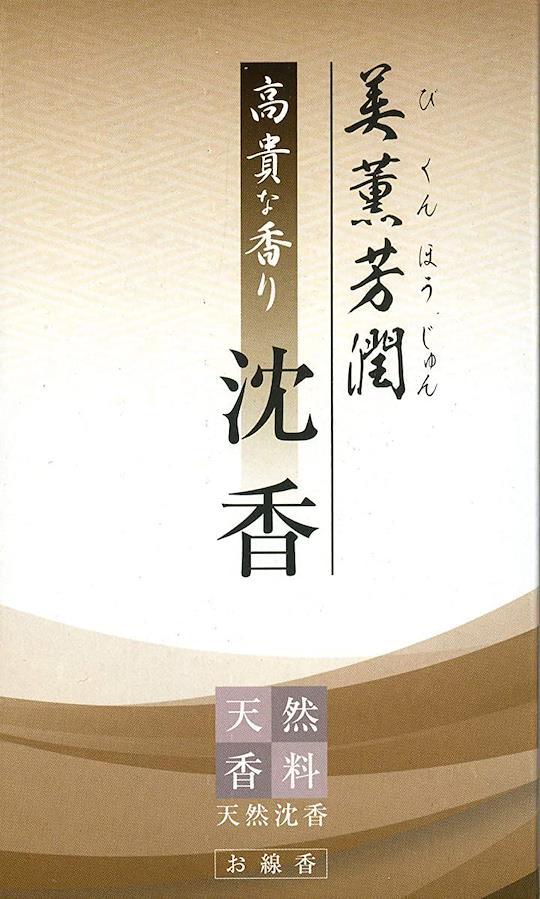
Long valued, agarwood (Jinkō) is a natural fragrant wood cultivated over many years.
The aroma of natural agarwood, cultivated over long periods by nature.
Shrinkage.
A pure domestic product from Awaji Island, Hyogo Prefecture.
Due to air flow and burning methods, the burning time of incense may vary slightly.
Main raw materials of incense: Sandalwood powder, agarwood powder, agarwood oil, dye.
Content weight: approximately 100g, Smoke: Yes, Length of incense: about 13.5cm, Burning time: about 25 minutes, Product dimensions and weight: 89x32x150mm, 160g.
2023/03/06 15:42:23#91deb0889e6041cf1fa75fb72bcff44b357cd1f6
・内容量:約100g 煙の量:有煙 線香の長さ:約13.5cm 燃焼時間:約25分 商品寸法・重量:89x32x150mm160g
2023/03/06 15:42:23#91deb0889e6041cf1fa75fb72bcff44b357cd1f6
| Product # | 2B4FQT8P3K |
|---|---|
| Weight | 160 g |
| Product package size | 9 x 3 x 15 cm |
You don't need to be in Japan to shop here. Sign up for a free account on ZenPlus now and enjoy buying and shipping to over a hundred countries, directly from Japanese online stores. You can ship your items internationally through JP Post (EMS, Airmail), UPS, DHL, FedEx, and other services. Get all the hottest items from Japan such as anime figures, Nendoroids, Nintendo and other video games, Hello Kitty and other kawaii plushies, fishing tackle, Japanese street fashion, Seiko and other watches from Japan, ramen and other Japanese foods, idol merchandise, and much, much more!
We work directly with Japanese shops registered with ZenPlus, so all internal processes are faster and more efficient - the result is a swift and affordable service, ready for you when you need it most. You have instant access to over 1,000 stores in Japan with just one click! Shop just as if you were in Japan, without spending a fortune. We'll get you the best deal possible from a vast collection of items from Japan. Join the ranks of people who prefer ZenPlus as their Japanese online marketplace.
We protect you, the buyer. Communication can be one of the biggest barriers when buying from Japan online, but it doesn't have to be that way. With ZenPlus, you are protected from many of the risks of international e-commerce: We'll take care of any questions, claims, and requests for the seller that you might have. We can provide a full refund if an item is not genuine, and a partial refund if it's not as promised. Feel free to ask us for more info about any of the items or shops on ZenPlus!