
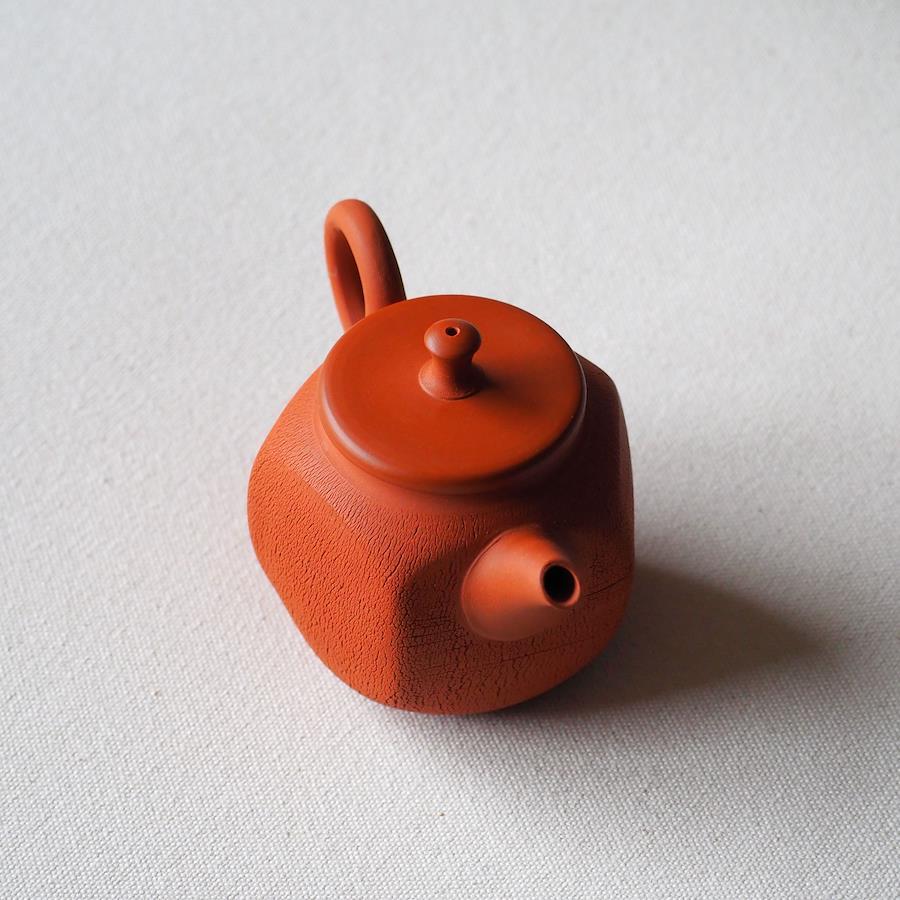
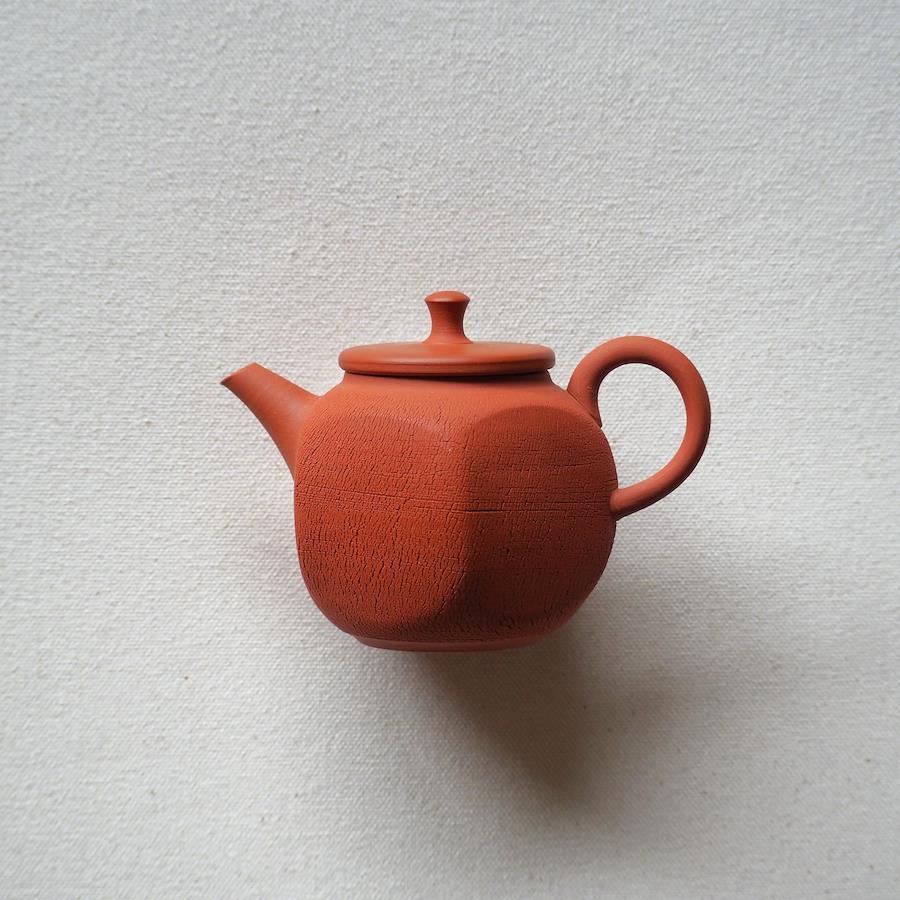
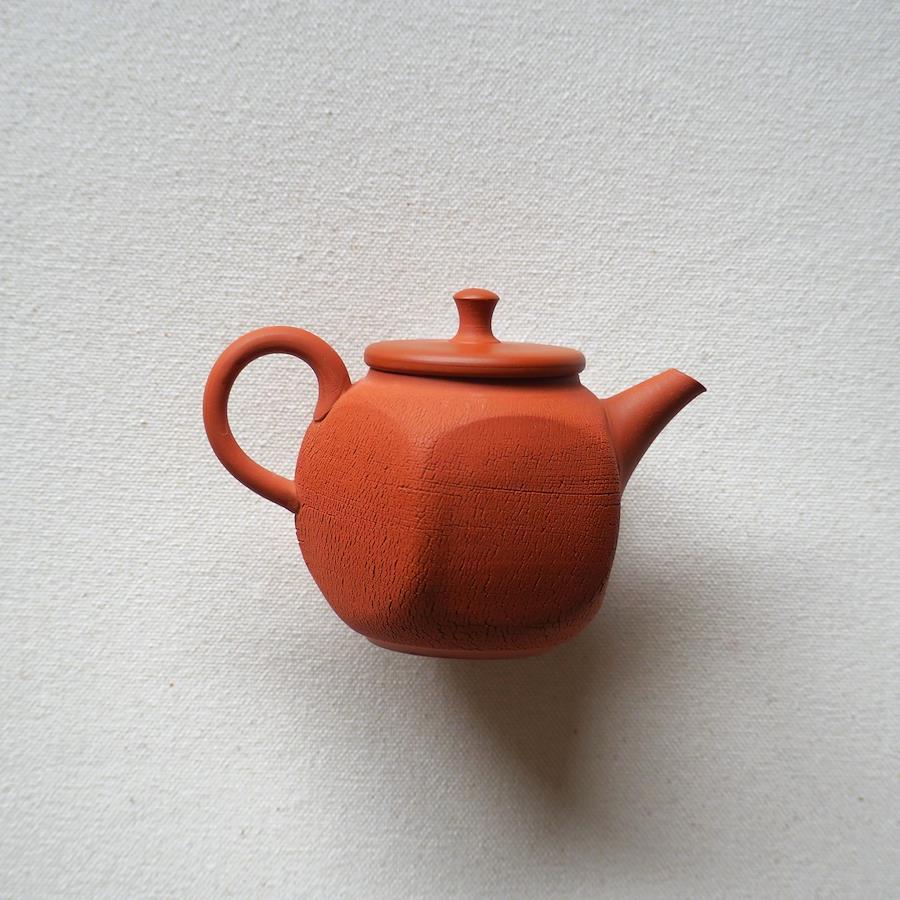
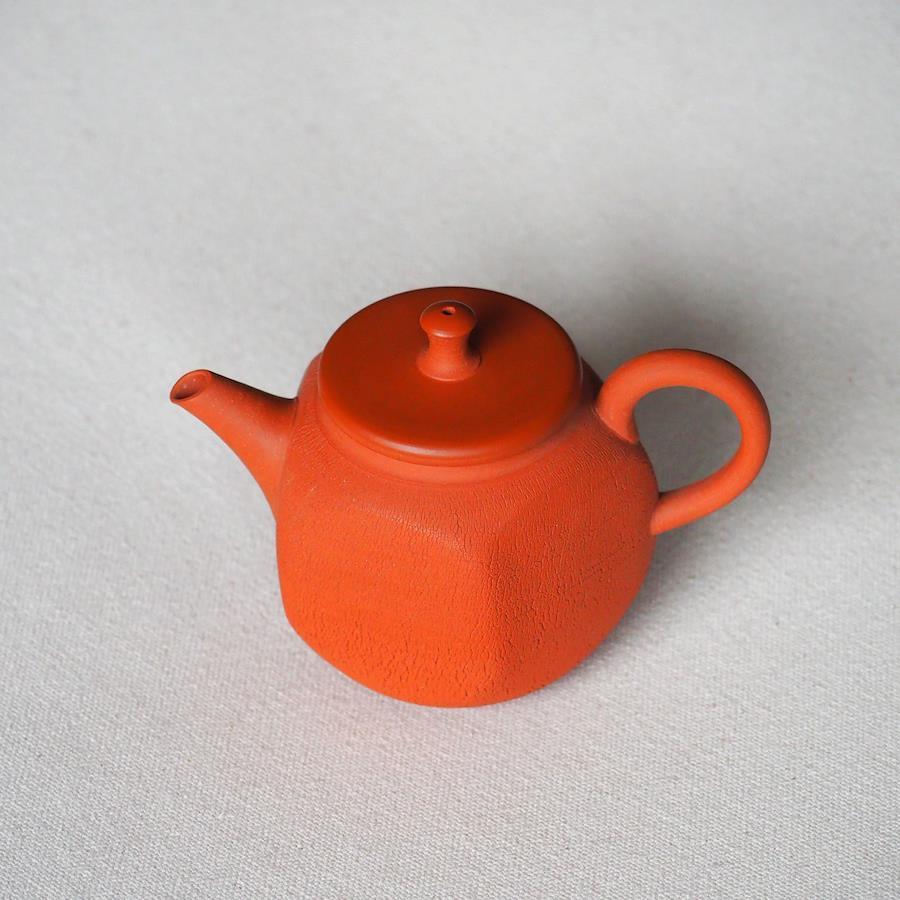
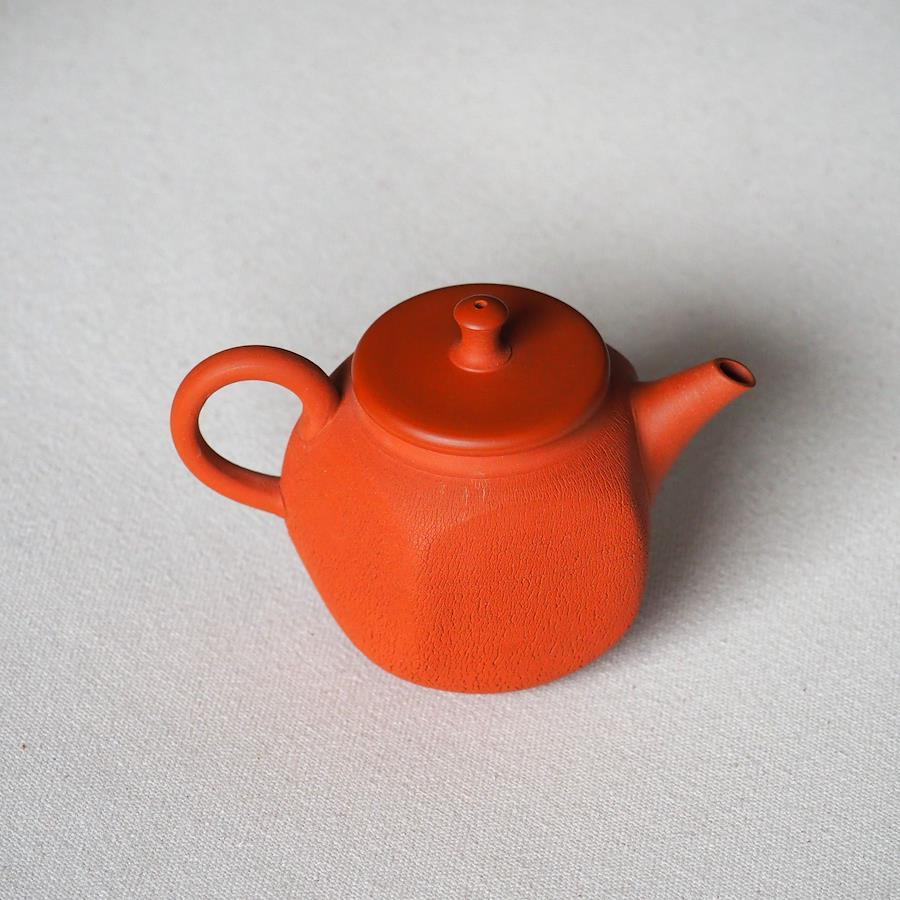
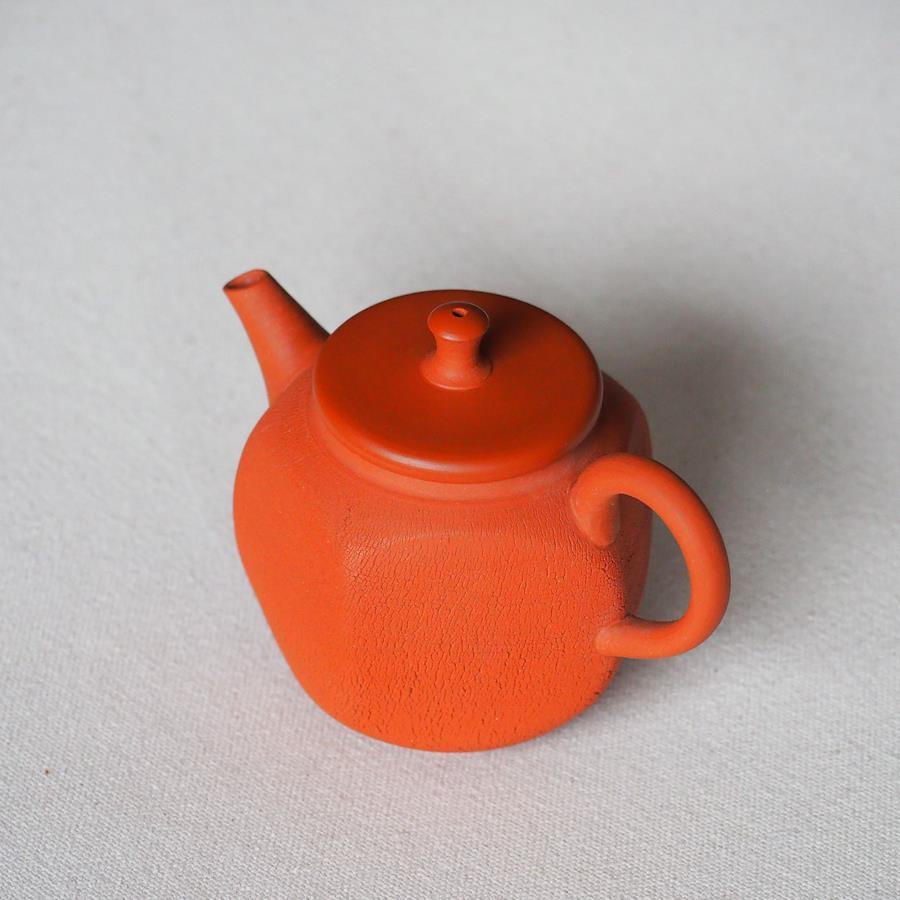
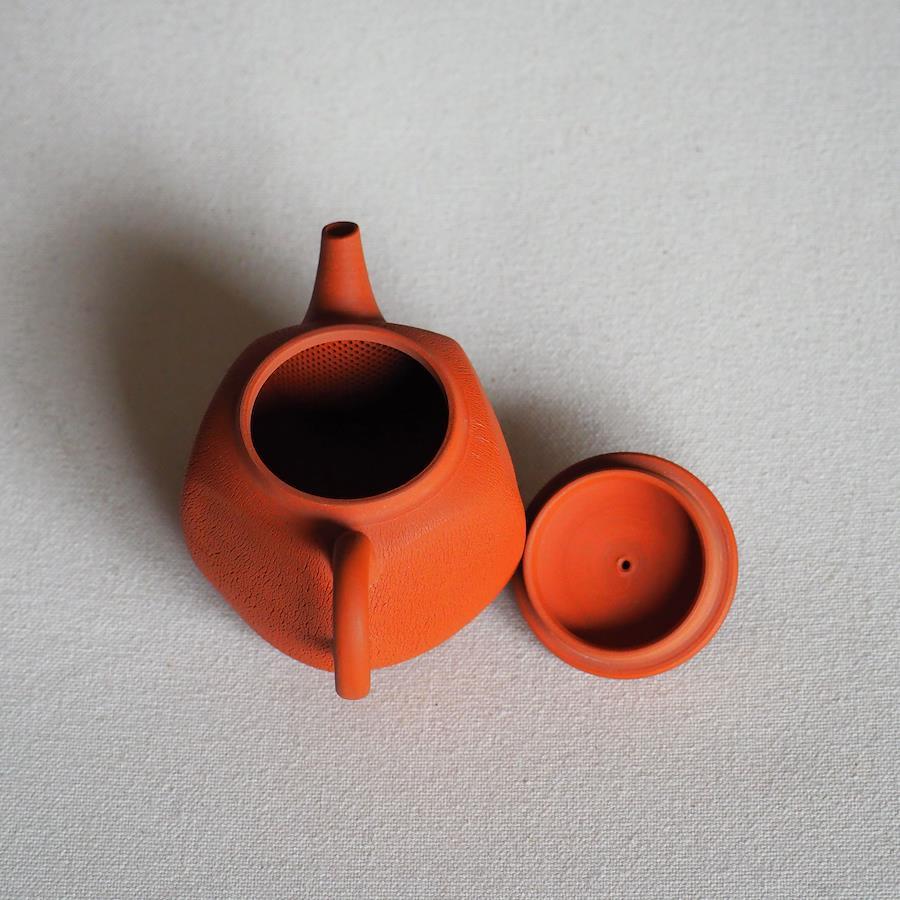
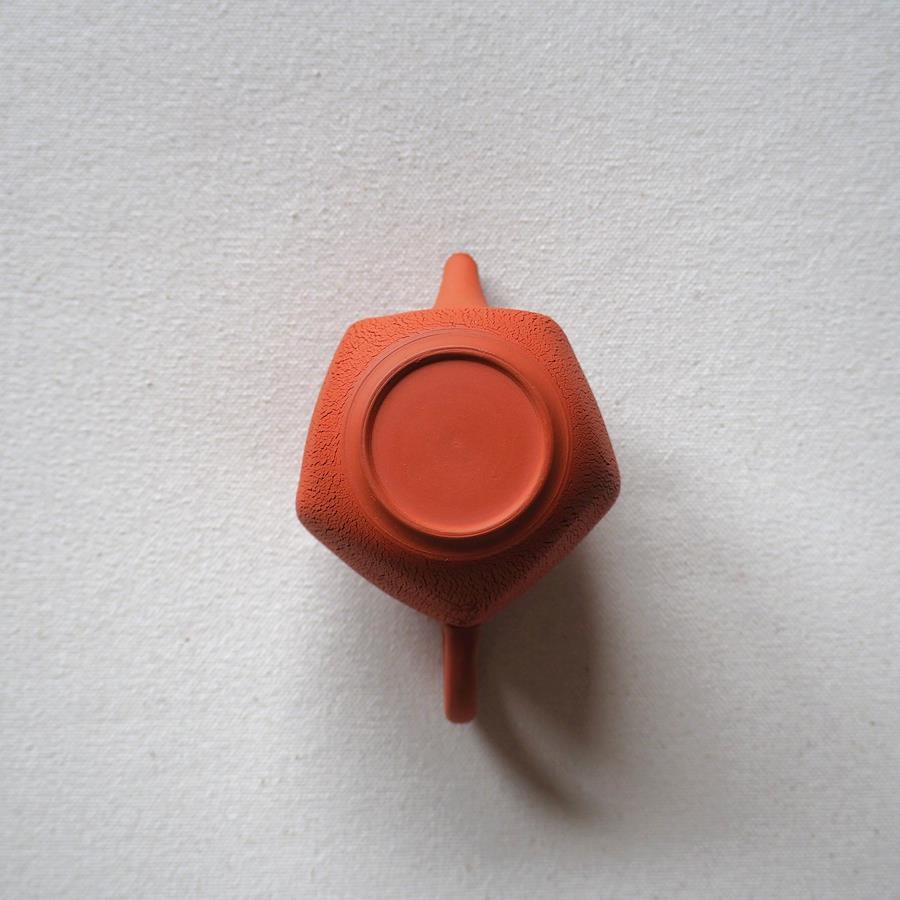
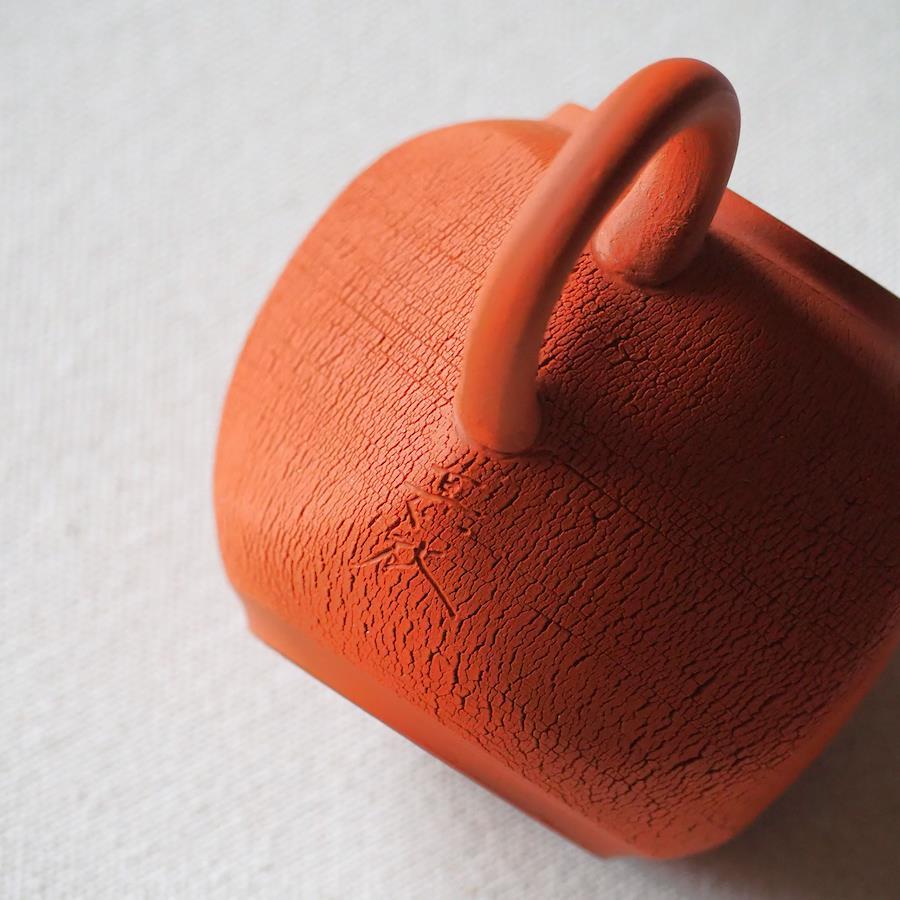
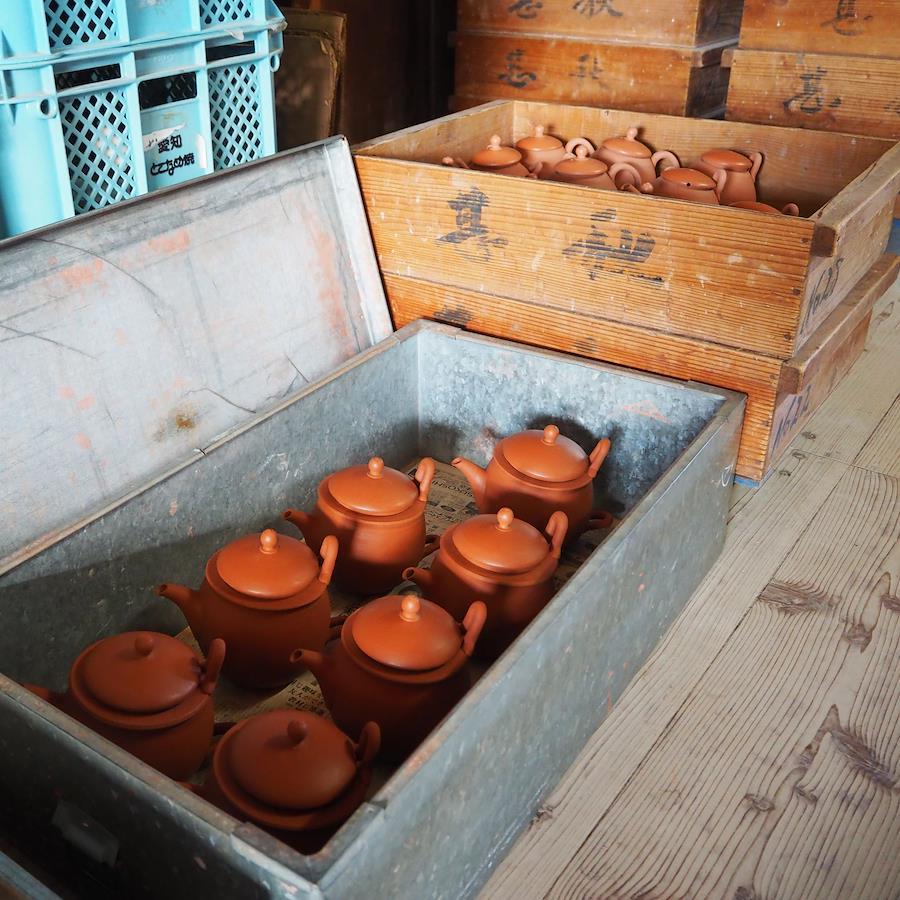
This is a Zhu Ni (red clay) kyusu (teapot) from Jinshu Touen. It is characterized by its pentagonal shape and the fine texture of the pattern on its surface. It is an ideal capacity for brewing Chinese or Taiwanese tea.
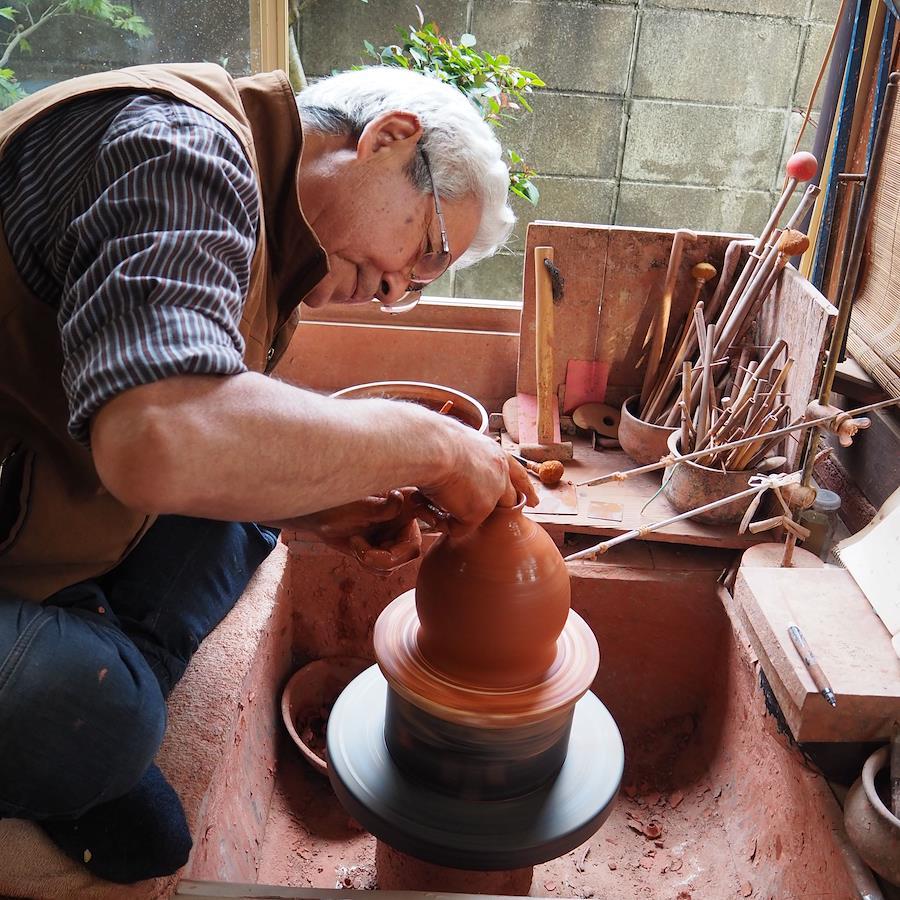
The technique used to create the fine pattern on the surface, called "Arashibori" (storm squeezing), is an original creation by Seiji Ito of Jinshu Touen. This kyusu, which utilizes the texture of Tokoname clay, allows you to feel the Japanese climate and tradition. Mr. Ito is a contemporary master craftsman in kyusu making, highly regarded not only in Japan but also in China and Taiwan.
(Brief Biography of Seiji Ito)
Born in Tokoname City, Aichi Prefecture in 1949
Began pottery activities in 1970
Certified Traditional Craftsman by the Ministry of Economy, Trade and Industry (Tokoname Ware, General Category)
Awarded the Minister of Economy, Trade and Industry Award for Distinguished Service in the Traditional Crafts Industry
Purveyor to the Imperial Household Agency
Winner of the Chozan Prize at the Chozan Pottery Exhibition 10 times
Winner of the Excellence Award at the 34th Banko Ceramics Competition 2020
Winner of the Silver Award at the 1st World Teapot Art Grand Prize in Yixing, China (*Kyusu competition)
Winner of the Jury's Recommendation Award at the 6th Taiwan International Golden Teapot Ceramic Exhibition (*Kyusu competition)
Numerous other awards
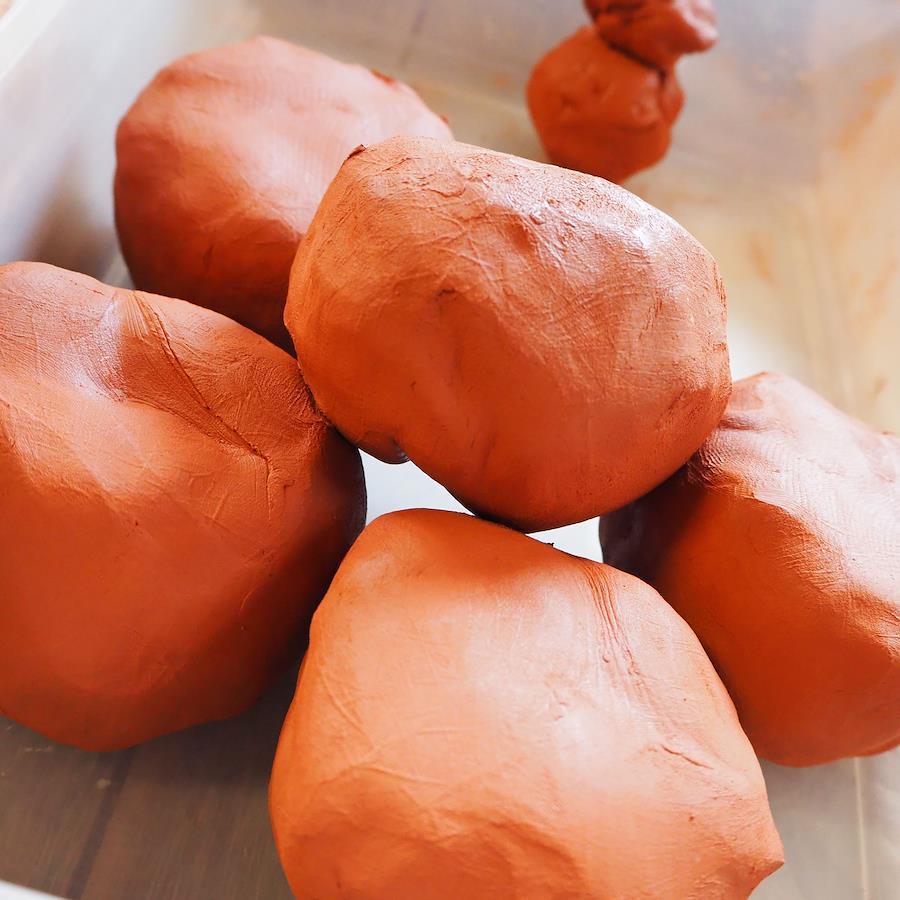
Tokoname Zhu Ni is rich in iron content. According to a paper on Tokoname Zhu Ni (Journal of Mineralogy, March 1961, by Takashi Sugimura, Nagoya Institute of Technology), the iron content of Tokoname Zhu Ni is approximately 5-6%.
This iron content binds with tannins, which are the astringent components of tea. Therefore, tea brewed in a Tokoname Zhu Ni kyusu has a smooth taste with less astringency.
A tasting session using Tokoname ware kyusu was held in Hong Kong. Participants commented that they could easily discern the difference in taste when drinking Chinese teas such as Rock Tea and Pu-erh Ripe Tea. While taste perception can vary depending on physical condition and environment, making definitive conclusions difficult, it is indeed felt that the taste becomes smoother.
The kyusu made by Mr. Ito are tea utensils perfected for ease of use. The water flow is smooth, and the pouring is excellent. The contact surfaces of the lid and body are carefully polished, so the lid fits snugly into the body without gaps. Details such as the angle of the handle and the overall weight balance are designed for ease of use.
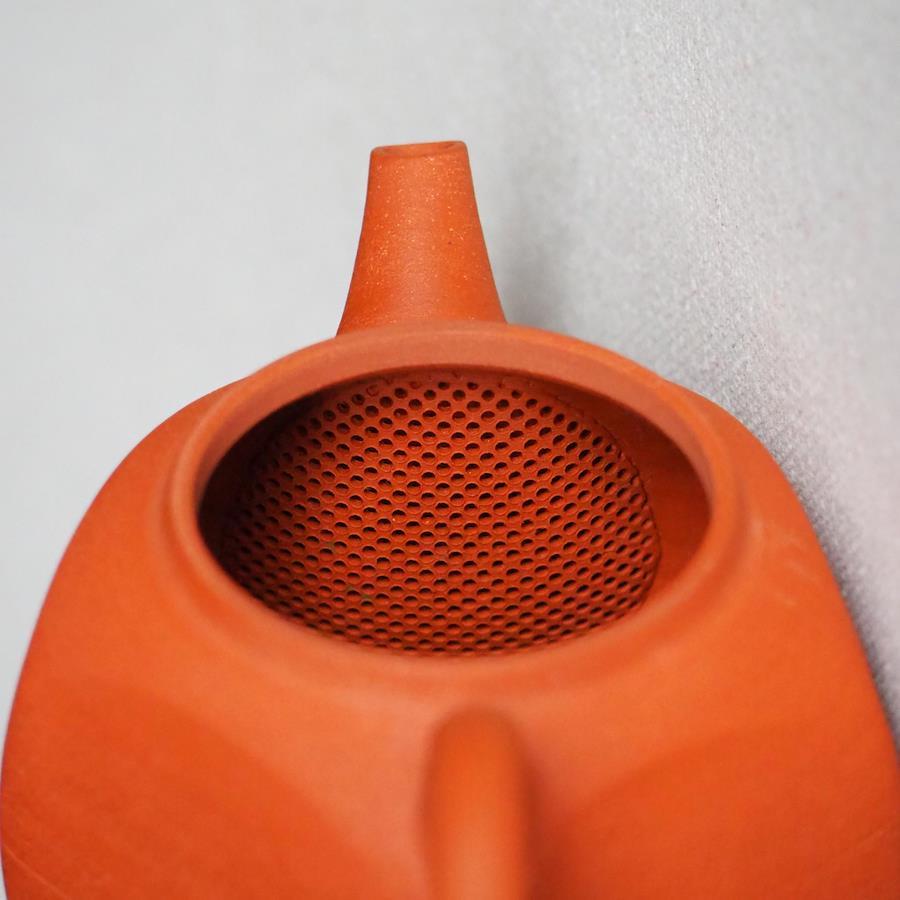
The tea strainer inside the kyusu is also made from the same Tokoname clay. The mesh strainer, made by hand, is a traditional technique of Tokoname ware. This is a superb kyusu where meticulous craftsmanship and bold design coexist.
Potter: Jinshu Touen (Tokoname Ware)
Firing: Electric kiln
Dimensions: Total length 12cm (including handle and spout), Body (longest) 8cm, Height 8.5cm
Capacity: 180ml
Weight: Approx. 130g
Packaging: Paper box
Notes: Handmade in Aichi Prefecture. Due to being handmade, there are slight individual differences. The seal between the lid and the body is good.
*Tokoname Ware
Tokoname Ware is pottery produced in Tokoname City, Aichi Prefecture. It was the largest ceramic production center in Japan during the medieval period, producing not only daily necessities such as plates, bowls, and pots, but also large ceramic vessels such as jars and urns.
Since the end of the Edo period (around 1858 AD), Zhu Ni tea ware and sake cups have also been produced. Since the mid-Showa period (1962 AD), the technology for electric kilns for Zhu Ni has been established. Tokoname Zhu Ni kyusu are fired at approximately 1100°C. Tokoname Zhu Ni is a clay that is well-suited to electric kilns, which operate at slightly lower temperatures than wood-fired kilns (1200-1300°C).
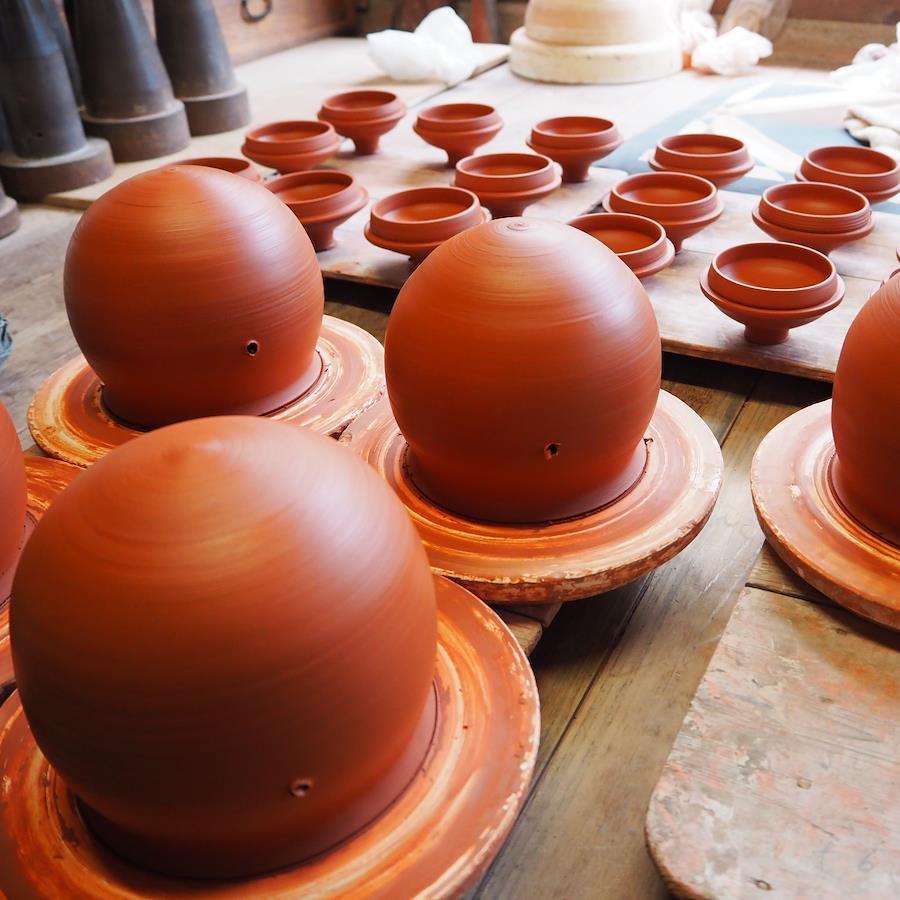
Millions of years ago, the Tokoname region, which was the bottom of a lake called Tokai Lake, has fine-grained clays suitable for kyusu, such as Zhu Ni and black clay. Tokoname has accumulated the necessary techniques for kyusu making, including high molding techniques and the "suriawase" (fitting) technique, which ensures a gap-free fit between the lid and body of the kyusu. It is the largest producer of kyusu in Japan.
| Product # | T007 |
|---|---|
| Weight | 200 g |
| Product package size | 12 x 9 x 8 cm |
You don't need to be in Japan to shop like the Japanese. Sign up for a free account on ZenPlus now and enjoy buying and shipping to over a hundred countries, directly from Japanese online stores. You can ship your items internationally through JP Post (EMS, Airmail), UPS, DHL, FedEx, and other services. Get all the hottest items from Japan such as anime figures, Nendoroids, Nintendo and other video games, Hello Kitty and other kawaii plushies, fishing tackle, Japanese street fashion, Seiko and other watches from Japan, ramen and other Japanese foods, idol merchandise, and much, much more!
We work directly with Japanese shops registered with ZenPlus, so all internal processes are faster and more efficient - the result is a swift and affordable service, ready for you when you need it most. You have instant access to over 1,000 stores in Japan with just one click! Shop just as if you were in Japan, without spending a fortune. We'll get you the best deal possible from a vast collection of items from Japan. Join the ranks of people who prefer ZenPlus as their Japanese online marketplace.
We protect you, the buyer. Communication can be one of the biggest barriers when buying from Japan online, but it doesn't have to be that way. With ZenPlus, you are protected from many of the risks of international e-commerce: We'll take care of any questions, claims, and requests for the seller that you might have. We can provide a full refund if an item is not genuine, and a partial refund if it's not as promised. Feel free to ask us for more info about any of the items or shops on ZenPlus!